
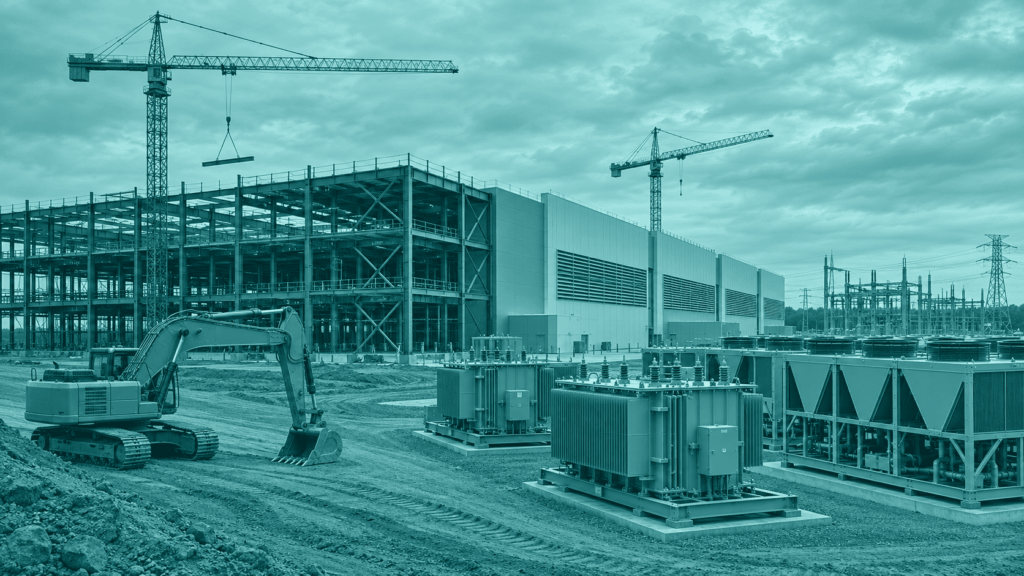
AI infrastructure stocks have lost about US$4.2 trillion in market value since June, according to a Financial Times analysis of global manufacturers, utilities and mining companies associated with data centre construction. The decline erased nearly half of the US$9.4 trillion the same companies had gained over the preceding year. The sell-off reaches across the supply chain at a time when major equipment suppliers are still reporting strong orders. For lenders, the question is how much of that backlog will turn into cash on the timetable projects need to service their debt.
Why the sell-off in AI infrastructure stocks matters for credit
The FT reported that Caterpillar’s market value had fallen 44% from its 30 June peak, while Oklo, Comfort Systems and Corning had lost roughly half their market value over the period covered. The US$4.2 trillion estimate reflects changes in market capitalisation for the companies in the FT’s analysis. Meanwhile, the US 10-year Treasury yield reached 5.15% on 13 November. Higher benchmark yields can reduce the present value of future cash flows and raise the borrowing cost for projects seeking new debt.
The Federal Reserve’s November Financial Stability Report put advanced computing-related debt issuance at more than US$680 billion through October 2026 and estimated related public debt outstanding at more than US$1.1 trillion. Its review of seven major technology companies also identified more than US$1 trillion in leases that had yet to commence and more than US$2 trillion in other contractual commitments, including take-or-pay obligations and residual-value guarantees. Those obligations have different payment triggers. Their effect on liquidity depends on when leases begin, when counterparties can call on guarantees and how much cash the underlying projects generate.
What Caterpillar, Eaton and Siemens are seeing in their order books
Caterpillar reported third-quarter sales and revenue of US$20.7 billion, up 17% year on year, and a record backlog. Its power generation sales rose 75%, with turbines and large engines serving data centre demand among the drivers. Eaton reported US$8.9 billion in quarterly sales, up 28%, including 19% organic growth. Its electrical backlog grew 46% year on year, supported by demand across multiple end markets. The FT reported that Siemens’ data centre electrical equipment backlog reached about €7 billion.
US Census Bureau data put private non-residential construction spending at a seasonally adjusted annual rate of US$790.6 billion in September, up 1.1% from August. That broader measure gives context for physical investment. Supplier-level evidence is more useful for assessing individual credit exposures, particularly the timing of shipments, the share of orders backed by deposits and the terms that govern postponements or cancellations.
When a data centre backlog can support project debt
Orders can precede financing, grid connection and commissioning by months or years. Buyers may reserve capacity with several vendors while delivery dates are uncertain. For a supplier, the value of an order depends on how much the customer has paid upfront, what it owes if it cancels and how quickly the supplier can collect after delivery. For a data centre lender, debt service depends on when power is available, the facility passes acceptance tests and customer payments start.
Blackstone-backed QTS illustrates how financing terms can change even for an established operator. Bloomberg, via The Business Times, reported that QTS reduced a planned refinancing from roughly US$800 million to about US$300 million after encountering pricing resistance and limits on some investors’ exposure. The revised plan included a US$100 million seven-year private placement priced at 245 basis points over benchmarks and a proposed US$200 million bank loan that had yet to be priced. Existing five-year bank debt could remain in place, leaving part of the original refinancing for a later date.
How tighter financing could reach suppliers and utilities
If developers raise less debt than planned, they may need more sponsor equity, a phased commissioning schedule or revised equipment orders. Suppliers can then face postponed deliveries, slower collections or requests to finance a larger share of purchases themselves. Utilities that build ahead of demand may have to wait longer for contracted capacity to be used. The financial impact depends on who agreed to bear grid upgrade costs, how much power the customer has committed to pay for and when those payments begin.
The Perennial view
Perennial will watch whether supplier backlogs turn into cash, how much scheduled power comes online and whether new project debt clears at the intended size. Steady collections, few cancellations and full-sized financings on comparable terms would suggest the equity sell-off has had limited effects on project funding. More deferred orders, rising vendor-finance balances or larger sponsor equity requirements would show where tighter capital is changing the pace of construction.
Explore more analysis on AI infrastructure financing and private credit at Perennial Markets.
Where Insight Meets Opportunity.
Sources
Financial-information disclaimer. This material provides general financial information and market commentary only. It does not constitute personal financial, legal or tax advice, an offer or a recommendation to buy or sell any security. Public and private investments may result in loss of capital. Liquidity, eligibility and securities-law restrictions may apply.


